

COLUMNISTS
THE NORTH-SOUTH POLITICAL ALLIANCE AND THE UNENDING INTRIGUES OF POWER

By Wole Arisekola
Frantically, I have never been desperate for anything all my life. Never! And how I wish everyone can honestly say so about themselves.
Most Nigerians are very desperate to acquire money, fame and political power.
I think the idea of getting something at all cost can drive one crazy, leading someone to take decisions that can stop him or her from making heaven and drive out all the rational thoughts from a person’s brain.
I appreciate the word ‘consistency’ and I am conscious of the word ‘loyalty’.
But to be frank, the politics of alliance with our brothers in the Northern part of Nigeria always comes with a price. Let me take you down memory lane; when Chief S.L Akintola formed an alliance with the Northern Party, National Council of Nigeria and the Cameroons (NCNC) against Chief Awolowo’s Action Group, majority of the people in Awolowo’s camp incited the Yorubas against him. They turned his people against him.
All the good things he was known for were forgotten. He was assassinated in the coup that followed that election.
Another example was Alhaji Lateef Jakande; he was the most popular among the governors elected on the platform of the Unity Party of Nigeria in the Second Republic. He was referred to as “Baba Kekere”, meaning second in command to Chief Obafemi Awolowo.
When the Military took over and he was nominated as a Minister, many Yoruba people went against it. He was told not to have anything to do with the military government. He went against the opinion of the Yorubas and his political career was destroyed till today. He lost his relevance in Yoruba politics.
Chief Moshood Kashimawo Olawale Abiola will serve as my third example.
Late Chief MKO Abiola was a successful businessman and a detribalized Nigerian. As a philanthropist, he was unrivaled. He was generous to a fault. His sin in Yorubaland before he died was that he associated himself with the National Party of Nigeria (NPN) which was seen by many in the South West as a Northern party against their beloved UPN.
Chief Abiola was not accepted politically in the South West before the military annulled his election.
National Democratic Coalition, NADECO was formed after Chief Abiola’s election was annulled by the General Babangida regime.
Chief Abiola eventually died in military custody in 1998 while fighting for both his freedom and the actualization of his mandate.
Aare Abdulazeez Arisekola Alao makes the fourth example and what actually happened to Asiwaju Ahmed Tinubu last week is like child’s play compared to what Arisekola went through during his lifetime for being in support of Northerners in the South West.
Late Aare Arisekola was nearly killed at the University of Ibadan by the well-organized political thugs who infiltrated the students on the campus of University of Ibadan. About 23 of his exotic cars were burnt to ashes. Despite being guarded by the best security operatives in the world, he sustained a deep cut on his head.
Not satisfied, the mob went to his companies in Ibadan and Lagos and burned them down.
A month before that incident, Aare had sent a message to Akolad, his contractor and father of former Commissioner of Finance under Senator Ajimobi, Bimbo Adekanbi.
He asked Akolad to go and renovate and fortify his office.
It was as if he knew that something of that nature would happen. He travelled abroad and over 100 exotic cars were parked inside his office. His business partner, Mr Tribute was around and some cash were kept in the office for day to day activities of running the business. All these were burnt down to nothing.
Arisekola Alao lost over 150 cars and property worth billions of Naira as his properties were torched.
When his friend, realized this monumental loss, he ordered the Federal Government to pay him a compensation of ₦ 100 million. The money was paid and lodged in United Bank for Africa.
Trust Aare Arisekola Alao, he did not touch it. He kept it with the bank. When Chief Obasanjo came to power and he was investigating the Sani Abacha regime, he sent security agents to Arisekola in Ibadan to demand for the ₦ 100 million Naira the Federal Government paid him when his properties were burnt.
Aare instructed me (Wole) to follow his brother, Akeem to UBA at Dugbe in Ibadan to prepare a ₦ 100 million naira draft in the name of the Federal Government and give it to the security agents who came from Abuja.
Not yet satisfied, they told Aare that they have instruction from the Presidency to bring his International Passport and all his travelling documents, he went inside and when Aare came out, he handed them over.
It will be in history that President Obasanjo kept Aare’s travelling documents with him all through his 8 years in office.
When he left office as President, he brought it back to him and he told Aare jokingly that “I just want you to be in Nigeria with me throughout my stay in power. I kept your passport inside my drawer for eight years!”
Till today, no one has thought of returning this money to Arisekola Alao’s family. Strange, isn’t it?
There is always a price to pay if you are a Yoruba politician associating with Northern politicians.
But now that, Asiwaju Ahmed Tinubu is on the hot seat. He is the one who sold Buhari to Yorubas. Some Yorubas don’t like that idea. The Afenifere didn’t want to hear anything about Buhari because of his past record. How Asiwaju muscled down this group and gained trust among Yorubas to support Buhari is still a mystery to me.
The well-fortified Yoruba regional party, Alliance for Democracy, AD, was annihilated to pave way for smooth alliance with Buhari’s party.
The Progressives were not happy. They didn’t like to join a Northern party. They saw Asiwaju Bola Tinubu as a traitor and they have been waiting for the day they would take their pound of flesh from him.
The opportunity came, when there was a crack among the new political family of Asiwaju Tinubu. They watched, arms folded, faces turned to the other side as Tinubu faced his fate alone. No single press release from Afenifere and Yoruba Elders. They simply maintained their “we warned him” stand. To them, he drove himself to the belly of vultures and he must pay the price like his past leaders who dared to against their will.
What happened last week was more than a protest. It was a repeat of history.
If you are a Yoruba man and you are into politics, be careful. Read Yoruba politics before you jump into any alliance. And if you are to do so, consult widely.
Asiwaju Bola Ahmed Tinubu has entered the political ocean of the SouthWest -North. He is in the middle now, only God knows where it will lead him to.
As for me, and my family, we will continue and continue to pray for him; for turning boys to men, for bringing some development to our region. Although to many of us, he is not perfect, neither is any of us.
But I am pleading with our fathers and brothers to PLEASE forgive him of any sin – big or small – he might have committed as person in the name politics. We should please follow our fathers’ proverb; “TI A BA FI OWO OTUN BA OMO WI, A MA NFI ISI FA MO RA NI” (if we reprimand a child with the right hand, we should embrace him with the left).
IRE OOO
Emi ni omo yin ni tooto
*Wole Arisekola, a journalist is the publisher of Streetjournal.com



By Olusegun Adeniyi
‘To this day, many people in Nigeria think I killed him.’
That was the opening line in the riveting account of the last hour of the late Bashorun Moshood Kashimawo Olawale Abiola as told by Ambassador Susan Rice. She was one of the visiting American diplomats in whose presence the presumed winner of the 1993 presidential election died on 7th July 1998. More significantly, Rice was the one who served Abiola the famous last tea. For the past 22 years, the former National Security Adviser to President Barack Obama has refrained from speaking on what exactly happened that day. But in her memoir, “TOUGH LOVE: My story of the things worth fighting for”, Rice recounts not only how Abiola died but also confirmed the street gossip about the last hour of the late General Sani Abacha.
In the memoir, Rice also recounts how she was conceived in Lagos during the two years her parents spent in Nigeria at a time her father was helping in the establishment of the Central Bank of Nigeria (CBN) after independence. As the American diplomat with Africa as her brief, Rice also recalls many of the crises on the continent, especially the one that eventually led to the death of Col Muammar Ghadafi in Libya and the encounters she had at different times with African leaders, including former President Olusegun Obasanjo who on one occasion was “nonchalantly hurling well-picked chicken bones—much to our amusement—backward over his shoulders across the presidential suite.” Now, let’s begin with the story of one of the most momentous periods in Nigeria’s political history from Rice, a former US Ambassador to the United Nations: The death of Abacha and Abiola.
In early July 1998, I traveled to Nigeria with Undersecretary of State for Political Affairs Tom Pickering, who was then among the most senior career Foreign Service Officers. As assistant secretary of state for African Affairs, I had gotten to know Pickering, my immediate boss, as a wise, fast-talking, and deeply knowledgeable diplomat. Having served as ambassador to six major countries and the United Nations, Pickering had seen and heard almost everything. The purpose of our trip to Nigeria was to encourage a responsible political transition. The nasty former dictator, Sani Abacha, had died a month earlier in the company of prostitutes. Viagra was reportedly involved. His interim successor was a moderate leader, Abdulsalami Abubakar, who hoped to shepherd Nigeria through a democratic election to select its new leader.
A primary objective of our visit was to meet the wrongfully imprisoned opposition leader, Moshood Abiola. He was the presumed winner of Nigeria’s 1993 election, but the results were annulled, and he was later arrested. We hoped to negotiate his freedom so that he could participate in the upcoming election.
Along with Pickering and U.S ambassador to Nigeria Bill Twadell, I met Mr. Abiola in an austere government guesthouse on the vast presidential complex in the capital, Abuja. A large and imposing man, Abiola came with his minder shortly after we arrived. Pickering, a former ambassador to Nigeria, knew Abiola from years past and greeted him warmly. Abiola, robust and happy to see us, sat on the couch and began to tell us how poorly he had been treated during his four years in prison. He was wearing sandals and multilayered traditional Nigerian dress. I noted that his ankles were swollen.
About five minutes into the conversation, Abiola started to cough, at first mildly and intermittently, and then wrackingly with consistency. He said he was hot, so I asked his dutiful minder, “Please turn up the air-conditioning.” Noticing a tea service on the table between us, I offered Abiola, “Would you like some tea to help calm your cough?”
“Yes,” he said, with appreciation, and I poured him a cup. He sipped it, but continued coughing. Increasingly uncomfortable, Abiola removed his outer layer, leaving one layer on top. I shot Pickering a worried glance.
The coughing became dramatic. I told the assembled men, “I think we better call for a doctor.” No one argued. The minder immediately placed the call. Abiola asked to be excused and went into the bathroom of our meeting room. When he emerged, he was bare-chested and sweating profusely, barely able to talk. He lay down on the couch writhing and then rolled facedown onto the floor. The doctor arrived promptly, took a quick look at him, and declared that Abiola was having a heart attack and must be transported to the hospital immediately. The men labored to lift the heavy Abiola into a small car, and we rushed to the nearby, rudimentary presidential hospital. I grabbed his eye-glasses off of a side table where he left them, his only belonging, thinking of his daughter Hafsat in the U.S whom I’d met before we left. The doctors worked on him, furiously, but within an hour they pronounced him dead.
We braced for violence. Abiola’s sudden and mysterious death would hit like a bombshell in Nigeria’s political tinderbox. Conspiracy theories would spread like metastatic cancer. Serious unrest throughout Nigeria was possible. Washington would hyperventilate, since it’s not every day a major figure drops dead with senior U.S officials. His family would need to be told. And, urgently, Nigeria’s acting president would have to hear directly from us, even though his minister was present at the hospital and knew how it went down.
Ambassador Twadell panicked and urged me and Pickering to rush to the airport and leave the country immediately. “Hell no,” we said. This delicate situation required deft management, not a hurried exit in a cloud of suspicion.
Right away, I called National Security Advisor Sandy Berger, my former boss, briefed him, and dictated a White House press release. Then we went to the Nigerian presidential palace to relay the entire drama to the acting president. We urged him to issue a careful statement to announce the establishment of an autopsy by international experts, in order to quell rife speculation and limit the potential violence. The acting president did both.
Next, Pickering, Twadell, and I went with former Nigerian Foreign Minister Baba Kingibe to see Abiola’s wives and daughters. All of us walked in together, but soon I realized that I was effectively alone in the room with these distraught women. The men had hung far back and left the job to me—just like the pouring of the tea. I proceeded to explain that their husband/father was dead. He had died of an apparent heart attack that began in our meeting. The doctors did all they could to save him but could not. The ladies’ wailing was so intense, it haunts me to this day.
We briefed the press, and I returned to the U.S embassy to write the official cable to report what had happened. As a senior official, I almost never wrote up cables summarizing meetings but in this case there was no more efficient way to ensure we got this very important history straight.
As I was typing, I heard in the distance on the CNN a familiar voice of indignation. It was none other than the Reverend Jesse Jackson, then serving as President Clinton’s special envoy for the promotion of democracy in Africa. Reverend Jackson served capably in this role, and with good intentions, but on this occasion, I could have throttled him. He was riffling about how Abiola died under suspicious circumstances in a meeting with U.S. officials. I could not believe my ears—our own guy implying we were killers! Immediately, I placed a call to his longtime aide Yuri and asked them to shut the Reverend down. “Please, just get him off the set.” That happened, even as I was still watching the segment.
We stayed overnight in Nigeria to try to calm things, offer any needed assistance to the government, and make an orderly departure. Fortunately, despite deep public upset, no significant violence occurred. The autopsy eventually confirmed the cause of death as a heart attack. Nonetheless, it was Nigeria where conspiracy theories abound. The most popular, which still has currency over twenty years later, is that I killed Abiola by pouring him poisoned tea.
From that experience, I found that being a woman policymaker comes with unique hazards. The men would not have offered, much less thought, to pour the tea. They may have swiftly called for a doctor. They may not have been able to break the bad news to the wives. Not for the first time, it was I, not they, who took the public fall for a crime nobody committed.
NOTE: Rice also wrote a brief on her Nigerian connection:
Almost immediately after their wedding, my parents moved to Lagos, Nigeria, where Dad had been sent by the U.S. Agency for International Development (USAID) as a research advisor to help establish the Central Bank of Nigeria in the wake of the country’s independence. Mom took leave from the College Board and worked for the Ford Foundation as an educational specialist for West Africa. Their two years in Nigeria, punctuated by travel around West Africa and Europe, were, by all accounts, enjoyable. They amassed an impressive collection of Nigerian art, including valuable sculptures that were a visual fixture of my upbringing.
I was conceived in Nigeria. Toward the end of their stay, Mom became pregnant with me, and I have long amused myself with the hypothesis that my origins in Nigeria, combined with my Irish and Jamaican ancestors, explain a lot both about my temperament and attraction to all things international.
Still on ‘Sex for Grades’!
“Olusegun Adeniyi’s audacious and honest book has accomplished the most important response to a national social crisis in our educational tertiary institutions, which is sexual harassment, particularly of female students. By so doing, he has provided an opportunity for a national debate on the depth of this problem and how best to tackle it. By also expanding its focus to cover other African countries, Adeniyi has demonstrated that this is a challenge that is pervasive and global. Written with compelling urgency, it is clear from NAKED ABUSE that putting teeth in the ethics code of zero tolerance for sexual harassment on university campuses remains a daunting and herculean task for African countries” —Jacob K. Olupona, Professor of African Religious Traditions, Divinity School and Professor of African and African American Studies in the Faculty of Arts and Sciences, Harvard University.
Interested readers can now get their copy of the ‘NAKED ABUSE: Sex for grades in African Universities’ on Amazon: https://amzn.to/3jEfMhF
• You can follow me on my Twitter handle, @Olusegunverdict and on www.olusegunadeniyi.com
PENDULUM BY DELE MOMODU
Fellow Africans, it is with sadness that I write this special tribute. The elephant has falling, one of Africa’s greatest revolutionary leaders, Jerry John Rawlings, has departed this world, on a journey without return. I’m totally stunned. There is nothing more terribly devastating and stupidly frustrating than the finality of death. I had tried endlessly to speak to former President Jerry John Rawlings barely three weeks ago during the funeral of his mum but couldn’t reach him. I’m glad Ovation International was with him everywhere. Perhaps, it would have provided some cold comfort for me if we got to speak, a kind of farewell. So sad.
The news had sneaked in like a thief in the night but it still came with a thunderous bang. My young Ghanaian mentee, Ian Okudzeto, had call me two days ago and he started with his usual pleasantries and niceties. I did not and could not have anticipated the satanic news he was about to deliver in the next few seconds. As calm and cool as the cucumber, Ian dropped the bombshell, as quietly as possible. “Chief Chief, I have bad news o, Papa J is dead!” I froze momentarily. God knows my brains shut down instantly. I couldn’t comprehend the mumbo jumbo I was hearing. “Who’s Papa J?” I thundered back in a combination of temporary ignorance and attendant frustration. “Papa J is Jerry Rawlings, your Junior Jesus!” True, I was fond of calling him Junior Jesus because of the Messianic roles he played in Ghana. Not everyone accorded him that honour. In fact, his critics called him Junior Judas. He accepted both monikers with equanimity. Oh, how can Rawlings die, I soliloquised! I didn’t wait long enough before I fired another shot. “Papa J cannot die, at least not yet,” I fantasized. “Pls, double check the news and call me back. I too will check my impeccable sources…”
The news was too cruel to be a joke. I knew the former President John Dramani Mahama was busy campaigning in some parts of the Ashanti Region, so it would be difficult to get his attention. I called a good friend of mine, Ms Rosemond Gasu, a diehard member of NDC, a political party that was founded by Flt. Lt. Jerry John Rawlings. I’ve always found her very serious, reliable and well-informed. She confirmed my worst fears in a jiffy. “Papa J is gone!” It seemed everyone had gone crazy and spewing profanities, I thought internally. But it soon dawned on me that I was the one living in denial. These were Ghanaians right there in Accra while I was here in Lagos arguing with them. Ian soon called back to confirm the same story.
Meanwhile, my lines suddenly became excessively busy with every caller, mainly Nigerian journalists, wanting me to confirm the story. I also called my photographer in Accra to head straight to the home of Papa J and send me reports from there. I suspended all other stories on Thursday, November 12, 2020, and tapped into my very extensive photo library to fish out the amazing moments Papa J shared with the Ovation International magazine at different times. I doubt if any publication ever got Jerry Rawlings and his adorable wife, Nana Konadu Agyeman-Rawlings, to talk the way they did to us in their Accra home and country home in the Volta Region of Ghana. We also managed to capture their romantic moments for our lenses. Those pictures have become priceless today.
Jerry Rawlings had spoken to our team for a total of 18 hours, covering five tedious days, but it was worth all the trouble. This was in 2004, some 16 years ago. And we became a family. He trusted with classified and we never abused the privilege. For us, off record was off record, nothing to be divulged. By 2007, there was never anytime I requested the former President to attend an event that he declined except it clashed with prior appointments. For example, I invited him to Lagos, Nigeria, on behalf of the Gov’nor of the Niteshift Coliseum, Mr Ken Calebs-Olumese, and Rawlings flew with me with his entire family, (Nana Konadu, Ezanator, Amina, Kimathi and Yaa Asantewa) a record-breaker according to him, and it demonstrated his special love and admiration for Nigeria and Nigerians. His wife spoke glowingly of certain prominent Nigerian families that supported them after they quit power and they were facing the vicissitudes of life. Rawlings, during that trip, accepted our invitation to join the then Governor of Lagos State, Mr Babatunde Raji Fashola, for lunch at the Marina State House.
Jerry Rawlings was the first African leader to be inducted into the Ovation International Hall of Fame. The ceremony was attended by his wife Nana Konadu who received the award on his behalf. He had attended the Ovation Red Carol the year before in Accra and enjoyed himself thoroughly. Rawlings had agreed to present our Cheque to the Kofi Awoonor Poetry Competition committee from the University of Ghana, headed by Professor Kofi Anyidoho, which I had endowed in memory of Professor Kofi Awoonor who was gunned down by terrorists in Nairobi, Kenya. His death shook me so much as I was addicted to his novel, This Earth, My Brother, at the then University of Ife (now Obafemi Awolowo University). His son, Afetsi, was only lucky to escape alive with bullets stuck in his right shoulder. It was such a great and colourful night at the State House Banquet Hall, in Accra, made possible by the effervescent presence of Papa J. There were other occasions we met and he was always so nice to me.
He was such a man of great character and amazing energy. When we encountered him in 2004, the first thing he asked was “Do you have the staying power?” We thought he was joking until we spent 18 hours listening to his uncommon tales. The Rawlings that spoke to us was indeed a man of passion for his principles, for his flying and undoubtedly for his country. He was a veritable example of a man of the people. He spoke with so much candor and was very down to earth. He had described himself to us as “a humble citizen of Ghana; a decent Ghanaian with a passion for justice and flying…”
And how did he develop his love for flying? “I was about six years old. I remember very well. Someone was distributing leaflets around where we were living in Adabraka. I was standing next to my mother outside that day and I saw that leaflet, they were calling for recruits.
“We were living in a house where you had other people, so one of the people there asked me what I would like to do, this was a few days later and I was standing by my mother again and I told the gentleman I would like to be a pilot. My mum banged me hard on the back. She said no way! You will be a scientist, you will be a Doctor. Those days being a Doctor was the in-thing. But that did not discourage me. I remember when I left school she had wanted me to continue and finish my O’levels but I had made up my mind to join the Airforce and felt I needed her permission so I bumped around for about a year. But she just won’t let me, so I had to move from her to my granny’s and later to my brother’s at Tema. Then one day I just saw the advertisement in the papers and I just went to join. I had a high recommendation. From that day, when I saw a police car driving towards the headquarters where we were being trained, I would be scared, thinking that my mum had gone to report me and they were coming to arrest me. Fortunately all the time I spent there nothing of the sort happened. I spent six months at the Military Academy and the other one and half years in Takoradi
“I had a few white instructors about three but the rest of them were Ghanaians, fantastic and very professional people. When we passed out, I won the speed bird trophy. I was being featured all over but those days we did not have television sets, but I was featured. My mother was invited but she did not turn up. I don’t know what she thought of it then, come to think of it I should probably ask her. My granny, who was my favorite among my older relations, was supportive. In fact she always wanted to have a taste of flying but time and circumstances did not allow it. I just took it for granted that she would always be there. But she died…”
Let me now fast forward to the question I’m sure you’re all dying to ask. How did Rawlings become a coupist? “I did not become a coupist. (Pauses a while). What happened was a revolution. You know we have but one life. Some of what we are seeing today are things that we have seen before. When you look at the youths today, you can see what appears to be hopelessness in their eyes, the future is bleak. I have seen soldiers very dispirited, being an officer in those days, we saw the extent and the depth of corruption not only in material terms but from the social point of view, they were just violating our own sensibilities and sensitivities.
“The spirit of the people was on the verge of being emasculated. Just to cite a few examples, the cost of living was horrible. People could hardly give three square meals to their children. I remember when I closed at work at 1.30 pm I will leave the station right at about 6.30-7.00pm because I could not just bear what a lot of the people were going through with their families. I went to repair the station tractor and on Saturday when there was no work I would marshal them and we cleared a vast area between the Airforce area and Civil Aviation Airport. We then planted cassava there for them to feed their families. Can you imagine some of us officers who should be watching out for our men were treating this people in a manner that was not correct? Here was I as an O’level student and I knew some of the ranks were A‘level students and two years ahead of me who were now technicians…
“The cassava was ready for harvesting one day, the men had done the harvesting and cleared the place. I felt pretty good and asked how it went. The men then told me the story of how they had harvested it and almost a third of it was taken by a middle senior officer who had come in his car and told them to fill his booth. At that point, I did what they did not expect. I told them if any officer comes here again and asks you to fill his booth, you have my permission to burn the car. I was an ordinary officer. But the point is the dispiritedness in the Airforce then was the same all over the country…
“The point is when these terrible things are happening in the society and it is clearly a consequence of corruption then you are asking for trouble…
“That was exactly what was going on in the country in the face of all this arrogant behavior of those in leadership position, they had clearly become intoxicated with power. It was getting dangerous. I know you in Nigeria faced a similar situation. It is like you are commanded by Generals, when the situations degenerate like that, people begin to look at the Generals to do something against who is in power. When it is not happening, the authority level of those we look up to begin to fall all the way down. I could not imagine that these people could not see these things that were so obvious and it was getting worse and worse, choking everybody. The anger of the ranks was targeted on us all because we were ruled by the Army, Acheampong, the ranks would say you use the mess, so you were all enjoying. The hatred from the top was transmitted to some of us and if we do not take some initiative, and they exploded, I don’t know how many of us would have lived.
“Three years prior to 1979, I remember I used to warn my fellow officers that it was getting dangerous. Some of them were these Marxist, Leninist reading people who were so steeped in their theory that they could not see the co-relationship between the thing they are reading in the book and the reality outside. And for some of them it was because they were involved in areas of activity where their stomachs were full, so they could not quite feel the pain like the ordinary person. The temperature was getting hotter and hotter. There were other painful experiences that I went through with colleagues. The government also at the time had destroyed the integrity of the commanding corps. The good ones had been compromised and those who would not allow themselves to be compromised had been posted out. You ended up having a situation that even if some of them wanted to make a move, it could not happen because the subordinates had lost respect in the officer corps. The situation was such that if an officer goes to a rank and said let’s move, he would probably shoot you first. They had grown to hate us because they felt we were responsible for their woes…”
So, how did they make the move eventually? Rawlings smiled before he answered. And he gave us the nitty gritty…
To be continued next week…
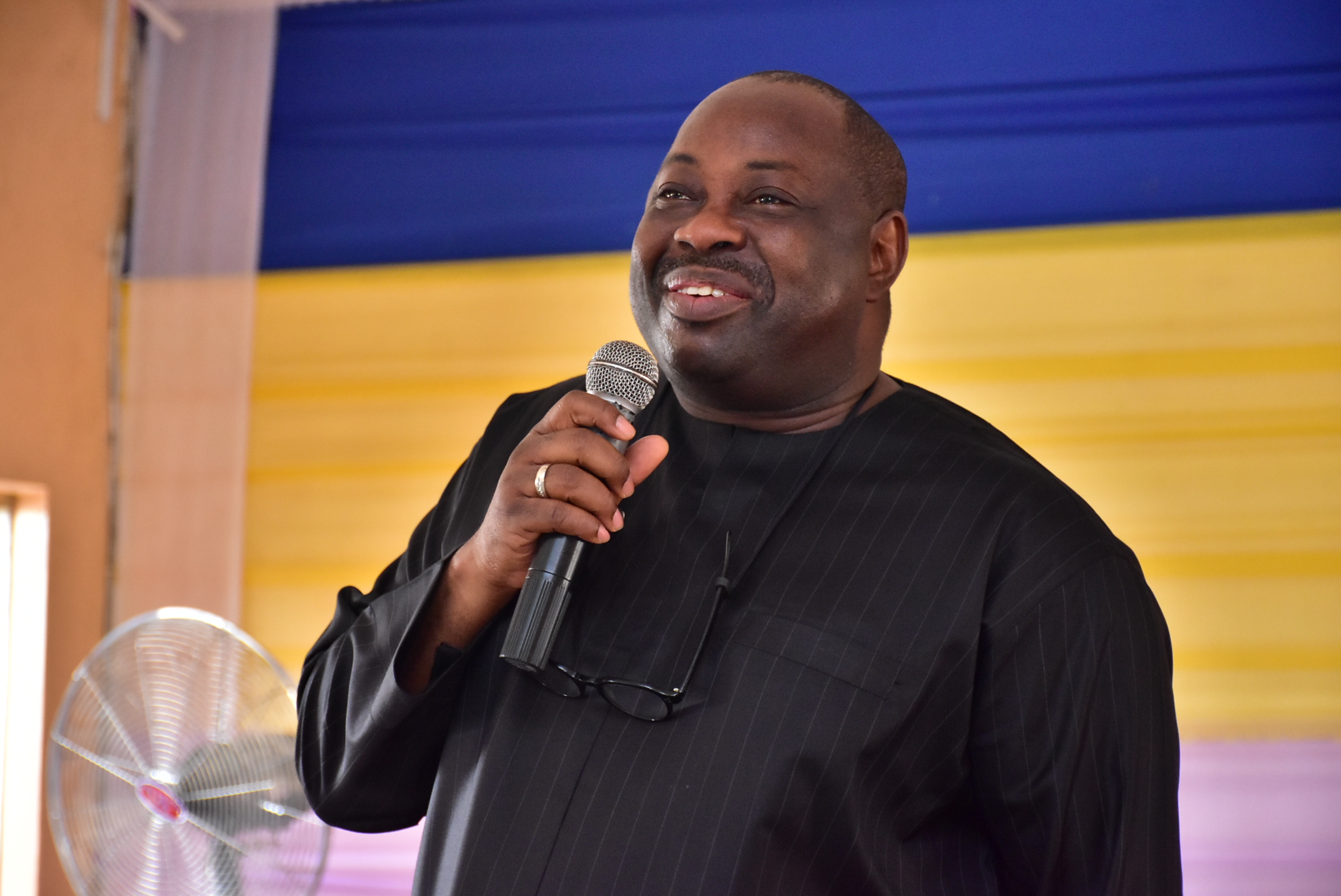
PENDULUM BY DELE MOMODU
Fellow Nigerians, it is difficult to imagine the amount of mayhem that visited Lagos this week. Let me just put it bluntly, our worst nightmares became reality, in a jiffy. The peace and tranquillity that Lagos had enjoyed for decades as the heartbeat of Nigeria was shattered into smithereens within a twinkle of an eye. On Tuesday, October 20, 2020, the mega and cosmopolitan city instantly joined the comity of other Nigerian States that have been mercilessly ravaged by terrorism and wars of attrition. The only difference was that the terror and insurgency was unleashed on the people by the Government itself using the very same security forces that have sworn an oath under the Nigerian Constitution to protect the entire country and its citizens, including the hapless residents of Lagos State.
A simple and straightforward protest, primarily about police brutality and national insecurity, that was put together by different groups of very bright Nigerians was turned into a theatre of war and their blood flowed due to no fault of theirs. The protesters had turned the Lagos LEKKI Tollgate into our own Tiananmen Square in Beijing, China. We’ve never witnessed such orderly, accountable, visionary and transparently honest organisers in this clime. We were all excited that for once we are much closer to our destination. But the forces of darkness, as usual, were hovering in the wings, with their fiendish plans. As masters of the game, they struck unashamedly. In Abuja and Lagos, they brought out their hirelings with daggers, cutlasses and cudgels. As if bewitched, we saw some young people, some looking underaged, with bloodshot eyes who were ready to inflict maximum damage on the two most important cities in Nigeria and its inhabitants. The one in Abuja looked coordinated, as in broad day light we saw hooligans and thugs being corralled and marshalled by agents of State and ushered into areas of pacifist protests that these hoodlums would turn into hotspots of bedlam and mayhem.
I will not bore you with details which are already in public domains courtesy of unprecedented social media activities. Nigerians waited patiently for President Muhammadu Buhari to intervene. To be fair to him, he did initially by receiving the Governor of Lagos State, Mr. Babajide Sanwo-Olu, the harbinger of the message and requests from the #EndSARS movement. The Governor was well applauded by the youths. The President was seen receiving the letter from the Governor, but his response was only a dry smile, in his famous taciturnity. One may need the power of clairvoyance to understand what Buhari is thinking and planning, most times. His dead pan looks, and straight poker face can never be deciphered and translated into meaningful statements.
I had advised the President last week to resist the temptations of unleashing terror on the harmless, defenceless and peaceful protesters. Any reasonable government would have protected them rather than open fire on those who were merely seeking a better life in their own country. The Nigerian Army had issued a press release about its intention to engage in nationwide military drills that would include cyber operations and manoeuvre’s codenamed “operation crocodile smiles,” whatever that means. I immediately smelt a rat and had the premonition and foreboding of the tragedy to come. One didn’t need to consult a Prophet or the Oracle to imagine what President Buhari is capable of doing. His records are not hidden. I was old and mature enough in 1984-85 to remember the massive human rights abuses which the regime of sorrow, tears and blood, which he headed, wreaked on Nigeria. His administration wanted to be known as one that employed strong arm and bully boy tactics, displaying not a hint of weakness, and I found those elements in his latest broadcast to the nation. It beggars belief that a leader of a democratic nation, not to mention one that’s considered a shining light in the African firmament, would even suggest something like this.
I was one of those who foolishly believed that anyone with such military meanness as the President possesses could change and become a reformed Democrat overnight. Leopards don’t change their spots indeed. I’m deeply sorry I sold that big lie and today I’m wrong while those who attacked us then were right, after-all. I was taken in and persuaded by my personal involvement with our President. In all my interactions with President Buhari in Nigeria and London spanning ten years now, both before and after he became the President of the biggest black nation on earth, I realised that I liked his simple mien and sense of humour. However, I have also discovered that his sense of managing people and resources is abysmally awkward and poor, to put it mildly. He appears to love to delegate when it is inappropriate and improper to do so. It would have been fantastic if he delegated to men and women of knowledge and wisdom. The most dangerous and calamitous of his personality traits is his apparent lack of empathy, which has become the biggest curse and burden on Nigeria today.
So, people died in Lagos last Tuesday. I do not believe that there can now be any doubt about that. On my part, I believe the question that is posed is whether people died on the scene or in the hospitals. Governor Babajide Sanwo-Olu has come out to declare that at least one person has died in hospital. Nevertheless, there still seems to be a raging debate that no one died at the Lekki Tollgate, but clearly all parties agree many were injured. I have watched the video posted by DJ Switch and I’m reasonably convinced she’s a well informed and credible witness. Despite the futile attempts by the military to hide behind one finger, there was ample evidence of their irresponsible recklessness and that obviously endangered and compromised innocent citizens, turned a peaceful protest into a bloodbath and a usually serene part of Lagos into an ocean of blood. The cowardly heavily armed, well armoured and bullet -proof clad military personnel who rained bullets at unarmed, cowering and surrendering protesters, against all rules of military and civilian engagement and ethics could not be seen when the properties of government and some targeted citizens were being vandalised, looted and ravaged. The orgiastic and gratuitous debauchery and violence was yet to be totally quelled as at last night.
Now back to President Buhari. The big masquerade finally came out of his gilded shrine two days ago. His suavely charming National Security Adviser, Major General Babagana Monguno (rtd.) was quoted as saying earlier in the day that the President was going to make some major announcements in his evening broadcast. Rumours soon developed wings like bushfire in the harmattan and we were being regaled with tales and stories began to fly that a state of emergency was about to be declared in Lagos State. No one knew the source, origin and veracity of the report but it seemed believable going by the hocus-pocus that was ongoing in the State. Several reasons were adduced. The conspiracy theorists swore that the Fulanisation agenda was real and the hawks were ready to descend and pounce on one man they considered too powerfully dangerous to take them on in 2023, Asiwaju Bola Ahmed Tinubu. It sounded plausible when they added the fact that the rioters wasted no time in attacking his media empire, at TVC and The Nation newspapers, respectively. How come the same military that had more than enough ammunition to fire on vulnerable, and unnaturally exposed youths in Lekki had gone funereally silent by the following morning and was allowing the savagery and bloodletting by unhindered unhinged youths to continue without respite, response or resolution? Of course, I dismissed the rumours as products of fertile imagination, but more rumours came in torrents. One thing seemed clear to me, that kites were being flown by Machiavellian persons intent on exploiting the rapidly degenerating situation for their own selfish and nefarious ends. There was yet another audio recording in circulation with the audible voice of the IPOB leader giving instructions to some specific men on where to destroy in Lagos. There was no confirmation as well and the motive could not be immediately established but it caused some anxiety.
As if to confirm the fears of those who saw Asiwaju as the target and the Lagos State Governor, MR Babajide Sanwo-Olu, as collateral damage, the speech by President Muhammadu Buhari was a veritable anti-climax, a non-event of no consequence whatsoever. It was bland and rambling. We waited endlessly for the monumental announcement, a declaration of some profound policy shift, a statement of great statesmanship and vision, but it was like waiting for Godot. This incidence of deja vu further confounded and infuriated Nigerians. The President totally glossed over Lagos, only mentioning the desecration of the palace of the Oba of Lagos, Oba Rilwan Akiolu. By so doing the President registered and confirmed his disdain for, and denigration of, the most economically powerful State, bigger than many African countries, and under the control of his own ruling political party, APC. It would have been impossible for Buhari to become President in 2015 without the epic support from Lagos and the South West in particular. It is sad, disturbing and distressing that the President could pointedly and studiously ignore Lagos. He thus failed to give hope and succour to a State that was almost on its knees, one which is often described as the California or New York of Africa.
Memories are indeed very short. I remember with nostalgia how Lagos was one of the places Buhari used to visit regularly in those good old days before he attained power the second time. Is it that the name Lagos has become so bitter to be mentioned in his speech? Is it that Nigerians who died, were injured, or lost their possessions in the ill-fated attacks and wanton destruction deserve no sympathy or empathy whatsoever? I’m shocked that our First Ladies, who often parade themselves as our mothers, are nowhere to be seen mourning the dead, consoling and comforting the injured and commiserating with their hapless and helpless families.
To worsen the situation, virtually all the party stalwarts of APC in Yorubaland went mute like victims of hypnotism. Their heritage was on fire, but they chose to bury their heads in the sand like the ostrich. The PDP which should have been a loud, voluble opposition, shouting from the rooftops in support of the remarkable protesters, has been missing in action. What an opportunity lost! What is it about this earthly power that makes some people become so squeamish about speaking up for their people?
Unfortunately, and to compound matters, what started easily as a very non-partisan, non-religious and non-ethnic movement is being deliberately turned upside down. It would take some wisdom for the organisers to bring this progressive movement back on track. My candid opinion is that their initial strategy has achieved its first aim. Their message has resonated globally and most Nigerians at home and abroad have bought into their ideas and ideals. They must not be discouraged. The time has come for them to restrategise. Since there is nothing more to hide at this stage, they should unite and pick their own leaders and form a formidable organisation. A crusade and campaign without structures will eventually give rise to anarchy, especially if it is infiltrated by nihilists and subversives, who are up to no good, as has been the case this week. The aim at this stage should not be political. It should be how to reactivate and eventually actualise their demands. They are craftsmen and women who have created a sustainable and resilient platform. They now need to find a way of reaching out to the angry youths, the bitter destroyers, who have been going on rampage and committing acts of gross brigandage. These destructive elements have been neglected for far too long and no one should be too surprised that they are now extremely angry and giving vent to their pent-up frustrations. Our leaders and all the elites are culpable, and we must collectively accept the blames. When the wealthiest of the world live side by side with the poorest, and the rich pay no attention to the sorrow, pain and anguish of their neighbours, anything and everything can happen. The dark tomorrow has arrived on Nigerian shores, despite the good well-intentioned, nationalistic and patriotic actions of the craftsmen and women who originated the #EndSARS protests. By whatever means, next must come the magnificent, triumphant dawn.
It would take a miracle to have a change in Nigeria speedily. There are just too many problems to tackle. But our problems are not insurmountable. All it would take is a determined and committed leadership. The absence of love is the beginning of destruction. The love for our nation and love by its people was openly demonstrated at the beginning of the #EndSARS protest. Government in its typical uncaring selfish and self-preservative ways chose to turn it into enmity and destroy our brittle, fragile fabric by unleashing unbridled and unrestrained terror on the populace!
We can surely do better, and the President must be the first to recognise this and change his ways. Like I keep telling President Buhari, it is never too late to make amends. Lagos State, like Nigeria, is greater than any individual or group of individuals. The President must remember his oath of office, and his promise to the nation and the great people of Nigeria to make their lives better. He must unite the country and heal its wounds. The best place to start is with Lagos State. The time to start is now! He must recognise and speak out against the terrible outrage, atrocities and savagery that have occurred and remedy them. He must be fair and do justice. He must be the Father of Lagos State and the Nation.
Let’s all pray for our dear beloved country.

-
 NEWS4 weeks ago
LEKKI SHOOTING: LAGOS GOVT ORDERS INVESTIGATION
-
 BUSINESS4 weeks ago
FIRSTBANK CEO, DR. ADESOLA ADEDUNTAN, BECOMES A MEMBER OF BRETTON WOODS COMMITTEE
-

 BUSINESS3 weeks ago
#EndSARS: Access Bank Announces N50 Billion Interest-Free Facility For Businesses
-
 BUSINESS3 weeks ago
THE MAKING OF A CSR MASTERSTROKE: AN X-RAY OF FIRSTBANK’S YEOMAN EFFORT TO MOVE ONE MILLION CHILDREN TO E-LEARNING
-
 NEWS2 weeks ago
#EndSARS: We Will Compensate Families Of Slain Policemen – Seyi Makinde
-
NEWS2 weeks ago
RESIDENTS EXPRESS RELIEF, AS SANWO-OLU FLAGS OFF RECONSTRUCTION OF IBEJU LEKKI-EPE HIGHWAY
-
NEWS2 weeks ago
RIVERS SECURITY COUNCIL TO REVIEW SITUATION IN OYIGBO
-
NEWS2 weeks ago
CIRCLE MALL LOOTING: SANWO-OLU PROMISES TAX BREAK, FINANCIAL SUPPORT FOR BUSINESS OWNERS